
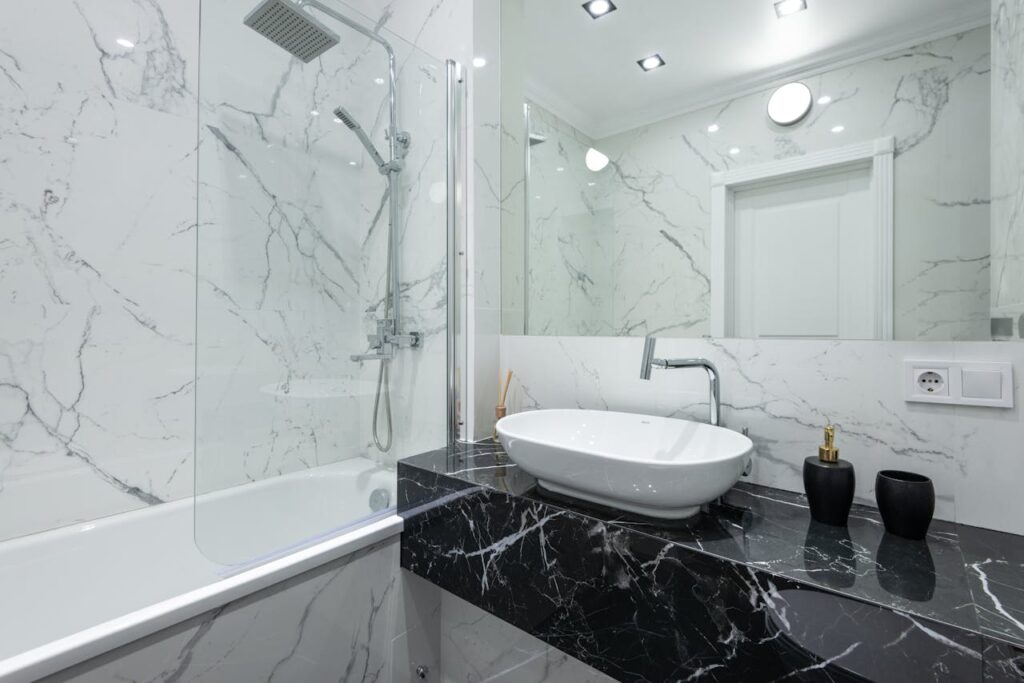
When it comes to updating your home, choosing the right surfaces for your bathroom is one of the most critical decisions you will make. The materials you select must not only complement your home design but also withstand a unique set of challenges: high humidity, temperature shifts, and daily wear. For homeowners living in the Treasure Valley and across Idaho, the debate often comes down to two major contenders: cultured marble and classic ceramic tile.
While both options have their dedicated fans, they offer vastly different experiences in terms of installation, daily care, and long term endurance. The dry summers, snowy winters, and notoriously hard water found in communities like Boise, Meridian, Nampa, and Caldwell mean that local factors play a massive role in how these materials perform over time. At Custom Marble, we believe that understanding the structural and practical differences between these two surfaces will help you make an investment that brings beauty and peace of mind to your household for decades to come.
What Is Cultured Marble and How Is It Made?
To appreciate why cultured marble has become a staple in modern Idaho bathroom renovations, it helps to understand what the material actually is. Unlike natural marble, which is quarried directly from the earth in large blocks, cultured marble is an engineered product. It is a precise blend of natural stone components and advanced manufacturing techniques, designed to offer the breathtaking appearance of natural stone without its inherent structural weaknesses.
The process begins in a controlled manufacturing environment, such as our dedicated facility in Caldwell. We mix precisely crushed natural marble stone with high strength polyester resins, pigments, and catalysts. This liquid mixture is then poured into custom molds that are shaped to fit specific bathroom configurations, such as seamless shower pans, expansive wall panels, or integrated vanity countertops.
The true magic of cultured marble lies in its outer layer. During the casting process, a specially formulated gel coat is applied to the mold. This gel coat fuses chemically with the stone resin mix as it cures. The result is an incredibly dense, non porous surface that is permanently sealed from the moment it is created. This engineered approach means that cultured marble completely eliminates the natural fissures, pores, and vulnerabilities that make raw natural stone or individual tiles prone to cracking and staining.
The Biggest Problem With Tile: Grout Maintenance
Ceramic tile has been a traditional choice for bathrooms for generations, loved for its design versatility and classic look. However, anyone who has ever owned a tiled shower knows that its greatest aesthetic feature is also its greatest functional nightmare: the grout lines.
Tile installations require hundreds of individual pieces held together by cementitious grout. Because standard grout is cement based, it is naturally porous. It acts like a hard sponge, actively drinking in water, soap residue, body oils, and minerals. In the damp environment of a bathroom, these filled pores become the perfect breeding ground for black mold, mildew, and stubborn bacteria. Homeowners often find themselves spending hours on their knees with a toothbrush, scrubbing toxic chemicals into the walls just to keep the lines looking clean.
In Idaho, this issue is amplified by our local water supply. Much of the water running through Treasure Valley homes contains high levels of dissolved minerals like calcium and magnesium. When this hard water evaporates off a tiled surface, it leaves behind a chalky white mineral crust known as scale. This scale binds fiercely to porous grout, turning pristine white or gray lines into a dingy, discolored mess that is incredibly difficult to remove without eroding the grout itself.
Furthermore, grout is rigid. As an Idaho home expands and contracts with our dramatic seasonal temperature shifts, grout lines frequently develop micro cracks. These tiny fractures allow water to seep behind the tile system, where it can rot the underlying drywall or subfloor long before you ever see the damage on the surface.
Durability Comparison: Cultured Marble vs Ceramic Tile
When evaluating long term durability, you have to look at how a material handles structural stress and daily impacts. Ceramic tile is undeniably hard, but it is also inherently brittle. If you accidentally drop a heavy glass bottle of cologne or a metal shower caddy onto a ceramic tile floor or shower pan, there is a high probability that the tile will chip or crack completely. Replacing a single broken tile is a delicate, frustrating repair that often involves damaging the surrounding waterproof barrier.
Cultured marble approach to durability relies on its unified composition. Because a cultured marble shower enclosure is installed in large, solid panels rather than hundreds of tiny pieces, it distributes weight and impact energy far more effectively. The resin backing gives the material a degree of structural flexibility, allowing it to absorb impacts without shattering.
The specialized gel coat on cultured marble is also highly resilient to surface scratching and everyday wear. It acts as an impenetrable shield against water penetration. Because there are no seams or grout lines on the face of the panels, there is nowhere for water to pool or find a path into your walls. While ceramic tile relies entirely on a hidden waterproof membrane that can fail over time, cultured marble provides a secondary, solid barrier that keeps moisture exactly where it belongs: in the drain.
Cost Comparison: Which Is More Affordable Long Term?
When comparing costs, it is easy to fall into the trap of only looking at the initial price tag of the raw materials. On paper, basic ceramic tile can look incredibly inexpensive. However, the true cost of a tile bathroom is heavily weighed down by labor and preparation. Installing tile properly is an art form that requires meticulous surface prep, waterproofing steps, layout planning, cutting, setting, grouting, and sealing. This translates to high labor costs and extended construction timelines, keeping contractors in your home for weeks.
Cultured marble is a custom manufactured product, meaning the upfront cost of the panels and vanity tops is typically higher than raw boxes of retail tile. However, because the panels are engineered to your exact dimensions ahead of time, the on site installation process is lightning fast. A skilled installation team can typically install a complete cultured marble shower enclosure in just one to two days. This massive reduction in labor hours often brings the total initial project cost right in line with, or even lower than, a high quality professional tile installation.
When you look at the long term financial picture, cultured marble becomes the runaway winner. Ceramic tile requires ongoing maintenance costs. To protect grout lines, you must apply professional grade sealers every one to two years. If grout cracks or crumbles, you face the cost of regrouting. If mold takes hold behind the tile due to a pinhole leak in the grout, you could face thousands of dollars in mold remediation and structural repairs. Cultured marble requires zero ongoing sealing, zero grout maintenance, and cleans up with a simple wipe of a squeegee and mild soap, saving you significant time and money over the lifespan of your home.
Which Material Is Right for Your Idaho Bathroom?
Ultimately, the choice between these two exceptional materials comes down to your lifestyle, your long term goals, and what you value most in your daily routine.
Ceramic tile remains an option for individuals who view their bathroom as a design canvas and are willing to accept the regular maintenance schedule that comes with it. If you absolutely insist on highly intricate geometric patterns, custom mosaics, or ultra bright contrasting colors, tile provides that specific stylistic freedom.
However, if your goal is to create a stunning, low maintenance retreat that shrugs off Idaho hard water, eliminates mold, and protects your home structural integrity for a lifetime, cultured marble is the superior choice. It offers a clean, seamless, and upscale look that mirrors the luxury of natural stone slabs at a fraction of the price. It turns the bathroom into a place of relaxation rather than a weekly cleaning chore.
At Custom Marble, we have spent decades helping Treasure Valley homeowners design spaces that look magnificent and perform flawlessly in our local climate. By manufacturing our products locally in Caldwell, we ensure that every panel is crafted to the highest standards of American quality.
FAQs
Q1: Can cultured marble get scratched, and can it be repaired?
While the protective gel coat on cultured marble is highly durable, it can develop fine surface scratches over time if abrasive cleaners like scouring powders are used. The great advantage of cultured marble is that it is fully renewable. Unlike cracked ceramic tile which must be chiseled out, minor scratches or dull spots in cultured marble can be easily buffed out with a fine polishing compound or automotive wax, restoring the original high gloss shine in minutes.
Q2: How does hard Idaho water affect cultured marble compared to tile?
Hard water minerals bind aggressively to porous tile grout and textured ceramic surfaces, causing white scaling and orange rust stains that require heavy scrubbing. Because cultured marble is non porous and perfectly smooth, mineral deposits have nothing to hold onto. While hard water spots can still form on the surface as water evaporates, they can be easily wiped away with a soft cloth and a mild vinegar solution, without any need for harsh scrubbing.
Q3: Is cultured marble cold to the touch like ceramic tile?
No. Ceramic tile conducts heat rapidly, which is why it often feels shockingly cold to bare feet and hands on a chilly Idaho winter morning. Cultured marble contains polymer resins that act as a natural insulator. This means the material retains heat and naturally adjusts closer to the ambient room temperature, providing a much warmer and more comfortable sensory experience when you step into the shower.
Q4: Can I use cultured marble for both my shower walls and vanity tops?
Absolutely. One of the greatest benefits of working with Custom Marble is the ability to create a cohesive, integrated design throughout your entire bathroom. We can manufacture matching shower walls, custom shower pans, trim pieces, and vanity countertops with integrated sinks from the exact same batch of material, ensuring perfect color consistency and a unified luxury appearance.
Q5: How long does a cultured marble bathroom installation last?
When manufactured and installed correctly by a professional team, a cultured marble bathroom can easily last for thirty to forty years or more. Because the material does not degrade, rot, or lose its waterproof qualities, its lifespan is significantly longer than tile installations, which often require grout replacement or complete rebuilding due to underlying water damage within fifteen to twenty years.