
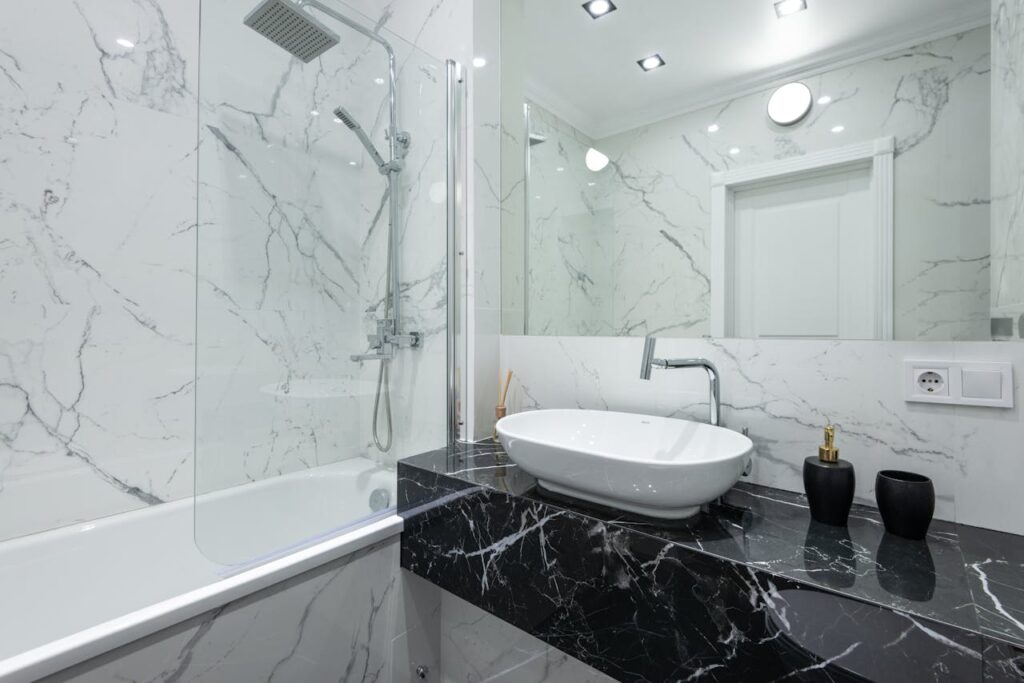
Remodeling a small bathroom presents a unique puzzle: how do you pack essential functionality, comfort, and style into a restrictive footprint? In Idaho homes whether you are updating a historic North End bungalow in Boise, maximizing a mountain cabin in McCall, or modernizing a master bath in Meridian small bathrooms are incredibly common.
Fortunately, a tight layout doesn’t mean you have to compromise on luxury or design. By choosing smart spatial strategies, high-end vertical storage, and custom solid surfaces, you can transform a cramped space into an airy, highly efficient oasis.
Here are the best small bathroom remodel ideas to maximize space in your Idaho home.
1. Float Your Fixtures to Reclaim Floor Space
One of the most effective ways to make a small room feel instantly larger is to keep as much of the floor visible as possible. When your eyes can track the flooring all the way to the baseboard, the brain perceives the entire room as more open.
- Wall-Hung Vanities: Swap out a bulky, floor-mounted cabinet vanity for a sleek, floating vanity. It frees up valuable square footage underneath for extra basket storage or simply left open to create a clean, minimalist footprint.
- Wall-Mounted Toilets: If you are doing a complete down-to-the-studs renovation, consider a wall-mounted toilet. By concealing the flush tank inside the wall cavity, you can save up to 8 inches of precious floor clearance.
2. Eliminate Visual Barriers with Seamless Glass
Traditional shower curtains or frosted glass doors cut a small bathroom in half, creating a visual wall that makes a room feel tight and claustrophobic.
- Frameless Glass Enclosures: Transitioning to a completely clear, frameless glass shower door allows natural light to flow uninterrupted from one side of the room to the other.
- Curbless Walk-In Showers: A continuous floor tile or matching custom shower pan that sits completely flush with the main bathroom floor creates a seamless visual transition. By removing the traditional step-in curb, your shower floor physically blends into the rest of the room.
3. Harness the Power of Custom Solid Surfaces
In a small bathroom, grout lines can quickly make walls look busy and cluttered. Opting for large-format materials or solid surface panels yields a much cleaner, expansive aesthetic.
| Material Choice | Visual Impact in Small Spaces | Maintenance Profile |
| Custom Engineered Marble Panels | Seamless, grout-free sheets that reflect light beautifully and make walls look continuous. | Extremely low; no grout lines to scrub or seal. |
| Traditional Mosaic Tile | Busy pattern matrix that can make a tight wall feel visually crowded. | High; requires frequent scrubbing to prevent mildew in tight spaces. |
| Standard Acrylic Liners | Uniform but can look cheap and lack the premium depth that opens up a room. | Low maintenance, but prone to scratching over time. |
4. Think Vertically with Recessed Storage
When horizontal square footage is at a premium, your only choice is to build up and into the walls.
- Recessed Wall Niches: Instead of adding protruding plastic shelves or caddies that steal space inside your shower, build a recessed niche directly between the wall studs. Line it with a premium polished solid surface sill for a high-end, practical storage spot for shampoos and soaps.
- Recessed Medicine Cabinets: Choose a sleek, mirrored medicine cabinet that sits entirely flush inside the drywall rather than hanging out over the sink. It provides hidden vanity storage without casting shadows over your counter.
5. Brighten Up with Layered Lighting
Idaho winters can bring shorter days and limited natural sunlight, making a dark, small bathroom feel even tighter. Proper light placement is essential to opening up the corners of the room.
- In-Shower Lighting: Don’t let your shower sit in the dark. Adding a flush-mounted, waterproof LED downlight makes the entire shower enclosure feel like an integrated extension of the room.
- Vertical Vanity Sconces: Instead of a single overhead light bar that casts harsh downward shadows, mount vertical sconces on either side of the mirror to diffuse light evenly across your face and bounce it off adjacent walls.
FAQs
Can I fit a walk-in shower and a tub in a small Idaho bathroom?
It depends entirely on your exact dimensions, but generally, a standard small bathroom (5×8 feet) cannot comfortably fit both without feeling incredibly cramped. In tight layouts, it is highly recommended to convert an underutilized tub into a spacious, premium walk-in shower. This maximizes daily usability and instantly adds luxury resale value to your home.
How do custom solid surface panels make a bathroom look bigger?
Grout lines act like a grid system that forces your eyes to subconsciously count sections, which highlights how small a wall actually is. Solid surface panels or engineered stone sheets eliminate those visual interruptions entirely. The continuous, sweeping veining patterns draw your eyes upward and outward, giving the illusion of a much grander wall space.
Are floating vanities safe and structurally secure?
Yes, absolutely. A floating vanity is heavily anchored directly into the structural wooden wall studs using heavy-duty lag bolts. When installed properly by a professional remodeling team, they are incredibly secure and capable of supporting heavy natural stone or engineered marble countertops easily.
What colors work best for small bathrooms without windows?
Stick to a palette of crisp whites, soft creams, pale grays, or light earth tones that bounce light efficiently around the room. To keep it from feeling sterile, add rich texture rather than dark color use polished custom vanity tops, high-shine chrome or warm brass fixtures, and natural wood grain elements on your cabinets.
Do I need a permit for a small bathroom remodel in Idaho?
If you are doing a simple aesthetic update like replacing a vanity, changing a light fixture, or installing new wall panels in the same footprint—you generally do not need a major building permit. However, if you are moving plumbing lines, knocking down walls, or adding new electrical circuits, Idaho building codes require proper permits and inspections to ensure safety and compliance.